
The complete guide
Getting a clean first recording, step by step
Getting the best out of the the t.bone SC 420 USB Desktop-Set on day one is mostly about position and gain, not settings hidden in menus. Start with the microphone six to twelve inches from your mouth, angled slightly off-axis rather than pointed straight into your lips, which reduces plosive pops on words starting with P and B.
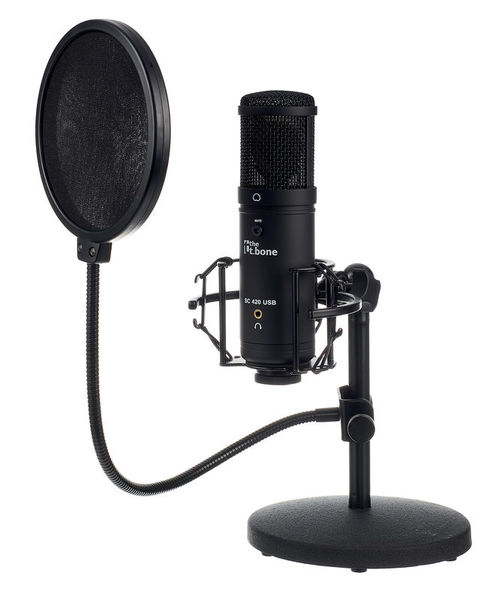
On the the t.bone SC 420 USB Desktop-Set specifically, the t.bone states: With USB port for direct operation on the computer; No additional drivers needed; Polar pattern: Supercardioid. At £69.99 it sits in the mid-range tier of this catalogue, and those specific figures (not just the USB connection type) are what should decide whether it fits your setup over another the t.bone model or a different brand at a similar price.
Set your input gain so that normal speaking peaks comfortably below clipping, leaving headroom for louder moments — a laugh, a raised voice — without distortion. It is far easier to boost a quiet recording afterwards than to fix a clipped one.
Record a thirty-second test clip in the room you plan to use before committing to a full episode. Listen back with headphones, not speakers, and check specifically for background hum, fan noise, or room echo, all of which are easier to fix by repositioning the mic or muffling a hard surface than by trying to remove them afterwards.
Once gain and position are dialled in, the the t.bone SC 420 USB Desktop-Set needs very little further adjustment episode to episode — most of the ongoing work in a home podcast setup is in the room, not the microphone.